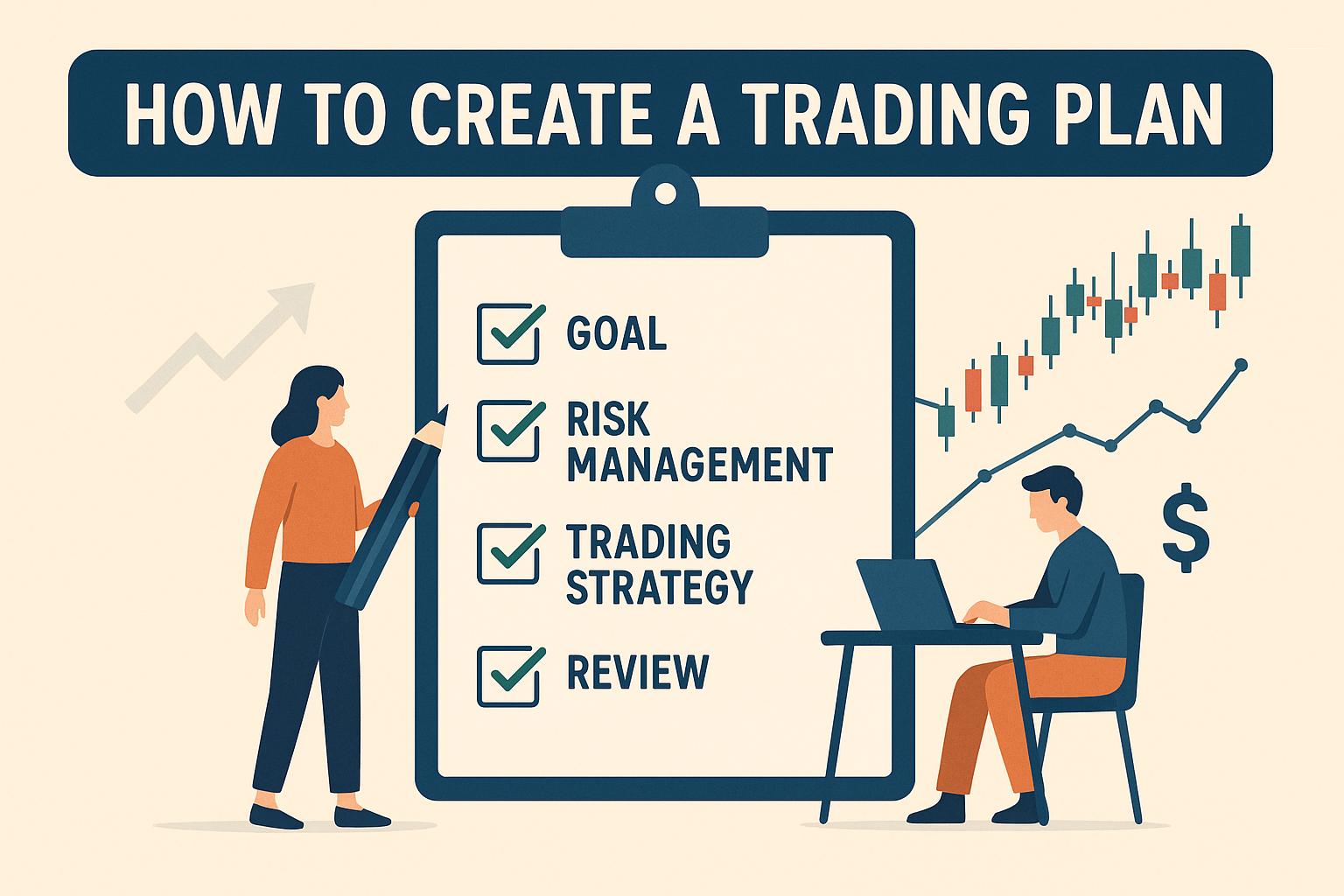
Understanding the Importance of a Trading Plan
Creating a trading plan is essential for anyone serious about trading in the financial markets. A well-structured plan helps in making informed decisions rather than emotional reactions. It serves as a roadmap for your trading journey, ensuring consistency and discipline. Without a plan, traders often fall prey to their emotions, leading to impulsive decisions and potentially large financial losses. A trading plan provides a framework within which you can evaluate your performance, make adjustments, and follow a systematic approach that aligns with your goals and circumstances.
Establishing Your Goals and Motivation
Begin by clearly defining your trading goals. Are you aiming for short-term profits or long-term wealth accumulation? Understanding your motivation will guide your strategies and help in measuring success. Consider writing down these goals to remind yourself of your objectives. Establishing tangible targets allows you to craft plans that cater to your aspirations, whether it’s achieving a specific annual return or building a diversified portfolio over several years. Objectives may include generating supplementary income, reaching financial independence, or even pursuing trading as a full-time career. The clearer your objectives, the better you can align your strategies accordingly.
Determining Your Risk Tolerance
An essential component of a trading plan is understanding how much risk you are willing to take. This involves identifying how much capital you can afford to lose. Different traders have different levels of risk tolerance, so it’s crucial to evaluate this honestly. A useful strategy is to decide on a percentage of your trading capital to risk on each trade. This not only limits potential losses but also prevents emotional decision-making should a trade not go as planned. Knowing your risk limits will help maintain composure and rationality, critical attributes for successful trading over the long term.
Choosing Your Trading Style
Selecting an appropriate trading style that matches your personality and lifestyle is crucial. Styles include day trading, swing trading, and position trading. Each style involves different time commitments and risk levels. Consider your available time and energy, as well as how you react to market volatility. Day trading requires constant attention to the markets throughout the day, while swing trading allows for holding positions over days or weeks, which might be more suitable for those with less time. Position trading, on the other hand, could involve holding investments for months or even years, appealing to those who prefer a long-term strategy.
Developing Your Trading Strategy
A robust trading strategy is vital for success. This includes deciding on the markets and financial instruments you want to trade. Some traders focus on stocks, others on forex, and some on cryptocurrencies. Additionally, establish entry and exit criteria. This could involve technical analysis using indicators like moving averages, or fundamental analysis focusing on economic data. The strategy should be clear and precise, highlighting which signals to use for entering and exiting trades, and under what circumstances to modify or abandon a position. Consistency in strategy fosters discipline and enhances the evaluation process.
Setting Criteria for Trade Evaluation
Establish clear criteria for evaluating each trade’s success. This helps in understanding what worked and what didn’t in your strategy. Consider factors like win-loss ratio, expected returns, and risk-reward ratios. Regularly reviewing your performance can lead to insights and improvements. By identifying successful trades and recognizing patterns in unsuccessful ones, traders can refine their approach, adapt to market conditions, and potentially increase their profitability. Evaluation also aids in discarding ineffective strategies and affirming methods that align with your trading objectives.
Incorporating Risk Management Controls
Risk management is a critical part of a trading plan. Include strategies such as stop-loss orders to minimize losses. Determine position sizes based on your funding and risk tolerance. Diversification can also protect against market extremes by spreading risk across different instruments or asset classes. Effective risk management ensures that adverse movements do not jeopardize your entire capital and helps maintain steady growth. It’s about balancing the trade-off between risk and reward, knowing how to protect yourself from significant losses while optimizing for wealth accumulation.
Documenting and Reviewing Your Plan
Finally, document your trading plan in detail, and commit to following it. Revisiting and revising your plan periodically is necessary as markets evolve and your personal circumstances change. This helps in adapting to new challenges and opportunities while staying focused on your trading objectives. Keeping a journal of trades, experiences, and emotional responses provides valuable insights over time. As the market dynamics shift, the ability to adjust your plan accordingly without losing sight of your goals is a critical aspect of long-term success. Documentation not only provides clarity but also acts as a personal accountability tool, ensuring that you adhere to strategic objectives rather than impulsive desires.
This article was last updated on: April 12, 2026