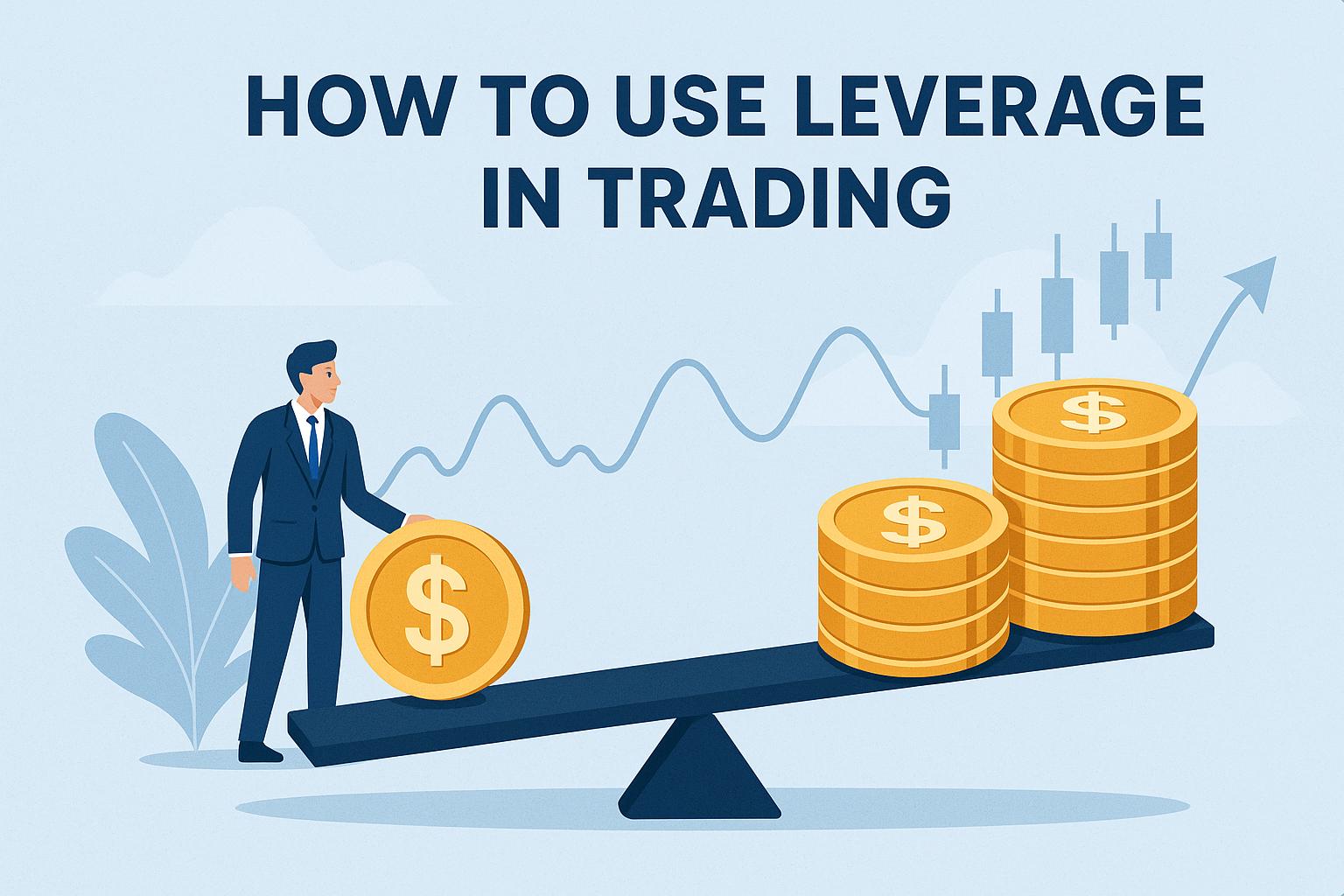
Leverage, a fundamental concept in trading, allows traders to control a larger position than what would typically be possible solely with their available capital. It’s crucial for traders to understand how leverage works, the potential benefits, and the associated risks before engaging in leveraged trading.
Understanding Leverage
At its core, leverage involves using borrowed funds to increase a trader’s exposure to financial markets. The leverage ratio, such as 10:1 or 100:1, indicates how much investment power is amplified compared to the trader’s equity.
For example, with a leverage ratio of 10:1, a trader can control a position worth $10,000 with only $1,000 of their own money. While this can significantly magnify profits, it equally increases potential losses. Leverage effectively allows traders to “borrow” capital from a broker to potentially enhance returns on investment. This concept is pivotal in trading, transforming the landscape of how both amateur and professional traders engage with financial markets.
The Mechanism Behind Leverage
The mechanics of leverage involve a broker who provides the borrowed capital required to open a larger position than the trader’s actual account balance would permit. The amount of leverage offered can vary significantly depending on the market and the broker’s policy. Traders put forth a specific amount of capital as collateral in a leveraged position, commonly referred to as the margin. The rest of the position’s value is underwritten by the broker.
By leveraging positions, traders can maximize their market participation. However, it’s vital to recognize that the borrowed capital can significantly magnify both profits and losses. A small fluctuation in the market could result in a significant gain, but conversely, it could lead to substantial losses as well.
Where Is Leverage Used?
Leverage is extensively used in various trading fields, including:
Forex Trading: The forex market commonly offers high leverage ratios, sometimes exceeding 500:1, allowing for substantial positions with low margin requirements. This high level of leverage makes forex trading particularly attractive to traders aiming for quick profits, but it also infers a high level of risk. Because currencies typically move in small increments, leveraging can significantly amplify the overall movement.
Stock Trading: Brokers offer margin accounts, enabling traders to purchase stocks with borrowed funds. However, leverage in stock trading is generally lower than in forex. Stock market leverage is regulated to some degree in certain jurisdictions to minimize market volatility and prevent systemic risks. Despite these limitations, leverage remains a vital tool for traders seeking to maximize returns on equity investments.
Futures and Derivatives: These markets naturally incorporate leverage, as traders must manage significant contract sizes with relatively small margins. The use of leverage in futures and derivatives markets allows experienced traders to speculate on future price movements with increased exposure, but also exposes them to correspondingly substantial risks.
Understanding Margin Requirements
When using leverage, understanding margin requirements is essential. The margin is the amount of capital a trader must have in their account to open a leveraged position. Typically, margin is expressed as a percentage of the total trade size.
For example, if the margin requirement is 10%, to control a position of $10,000, the trader must have $1,000 in their account as collateral. This margin acts as a security deposit, ensuring that the broker has coverage in case the leveraged position ends in a loss. The funds held as margin are unavailable for other trades while the position remains open.
Traders need to maintain awareness of margin requirements and continuously monitor their available margin to avoid margin calls. A margin call occurs when the account’s equity falls below the minimum margin level required, forcing the trader to either deposit additional funds or decrease their open positions.
Risks of Leverage
While leverage can amplify profits, it can also lead to significant losses. Traders should be aware of the following risks:
Increased Losses: Losses can exceed the initial investment if the market moves against the trader’s position. This phenomenon occurs because the borrowed capital amplifies the impact of adverse market movements on the trader’s position.
Margin Calls: If the equity in the trader’s account falls below the required margin level, they may be required to deposit additional funds or close positions to maintain the minimum margin. Failure to meet a margin call often results in an automated closure of open positions to protect the broker’s assets.
Volatility: High market volatility can adversely impact leveraged positions, leading to rapid and unpredictable losses. Price movements can be unexpected, and sudden shifts can result in dramatic financial consequences for leveraged traders.
Best Practices for Using Leverage
To mitigate risks associated with leverage, traders can adopt several strategies:
Risk Management: Utilize stop-loss orders to limit potential losses and set realistic profit targets. Establishing clear boundaries helps maintain discipline and prevent emotions from dictating trading decisions.
Education: Familiarity with the market, instruments, and trading strategies is vital to successfully manage leverage. Comprehensive knowledge enables traders to identify potential risks and opportunities and better handle unforeseen challenges.
Conservative Leverage Ratios: Use lower leverage to reduce the potential impact of adverse market movements. By employing less aggressive leverage ratios, traders can better safeguard their invested capital and avoid unnecessary risk exposure.
Additionally, continuous learning and leveraging market insights from experienced traders can further enhance trading practices. Respecting the limitations of one’s knowledge and staying informed about market trends and conditions can be a decisive factor in effectively leveraging positions.
For more information on trading and leverage strategies, consider exploring additional resources from experts in the field. Platforms like Investopedia offer comprehensive guides and tutorials for aspiring traders. By cultivating an in-depth understanding of leveraging, traders can better navigate the complexities of financial markets, align their strategies with their risk appetite, and ultimately pursue successful outcomes effectively.
This article was last updated on: March 1, 2026